
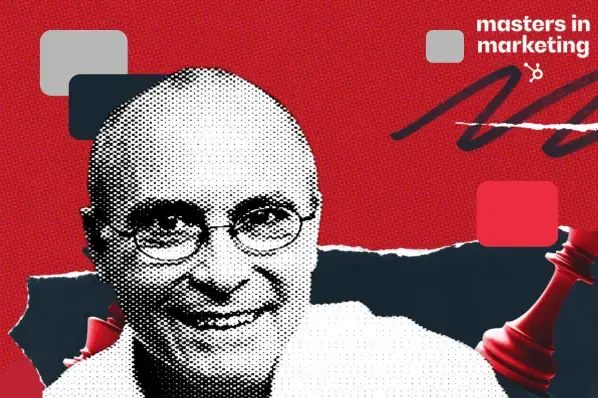

Pop quiz! What do Meow Wolf, Blue Man Group, Cirque du Soleil, Disney Imagineering, and Ringling Bros. have in frequent? They’ve all sought out at present’s visitor as a marketing consultant.
However at present’s grasp is… truly not a grasp of advertising in any respect. The truth is, he’s by no means labored a day in advertising. However he actually wrote the e book on interactive performance.
And as advertising leaders pour huge budgets into branded experiences, stay occasions, and interactive model activations, you’re going to need to hear what he has to say.

Title: Jeff Wirth, Co-founder of the Interactive PlayLab
Job: Designs, directs, and consults on interactive experiences, digital world purposes, and stay immersive fiction
Declare to fame: Did you see the record of firms he’s labored with?!
Enjoyable reality: Began his profession as a clown for the Ringling Bros. Barnum & Bailey Circus
Lesson 1: Start on the finish.
When designing your interactive expertise, Wirth recommends first eager about what you need contributors to stroll away with. No, not a procuring bag stuffed with merch. Assume extra philosophically.
“What would you like individuals to know after the activation that they didn’t perceive earlier than?”
For Meow Wolf or Cirque du Soleil, that could be discovering a childlike sense of surprise. For a model activation or advertising occasion, it’ll be… one thing no much less deep, truly.
Positive, you could possibly purpose for them to stroll away with some product information — if you’d like them to overlook it by the point they get again to their automotive. Actually memorable experiences purpose for one thing extra profound.
Wirth says step 2 is asking: “How will we make it so we don’t inform them what to know? We create a context inside which they’ve a possibility to uncover that.”
That context is the skeleton to your occasion or expertise design.
However Wirth emphasizes that this should solely be a possibility — making an attempt to pressure a participant to a particular conclusion is, to his thoughts, each unethical and probably damaging. Which brings us to Lesson 2.

Lesson 2: Empower your contributors to assume for themselves.
“Put the precedence on the participant’s capability to assume for themselves,” Wirth advises.
As an anti-example, he shares the story of a pharmaceutical firm that approached him to create an interactive expertise. When Wirth required that the expertise current their product amongst a variety of choices, the corporate shortly backed out.
That’s a mistake. Except for being ethically questionable, railroading a participant will assuredly result in an expertise that’s forgettable at finest — at worst, it may very well be dangerous to the participant and your model.
However that doesn’t imply you shouldn’t give your contributors one thing to assume about. Wirth explains that if you’d like individuals to play, you should give them sufficient to play with.
What’s extra, “you should give them the expertise that they’ll play and achieve success at it.”
In different phrases, your expertise wants to offer sufficient context that your contributors know how you can play — and may even really feel accomplishment — however not a lot that they’re merely following directions.
Lesson 3: Play is not only for kids.
Play could be a highly effective element of a stay occasion. However “play” means various things to totally different individuals.
You may play a recreation. You may mess around. You may play alongside. These all have totally different shades of that means that have an effect on what your contributors are requested to do and what they get out of your occasion.
You’ll want to determine what kind of play serves the context you outlined in Lesson 1. For Wirth’s experiences, play means “make-believe for the aim of empowerment.”
Why make-believe? That’s a tough phrase to place in entrance of stakeholders.
“One, you get the chance to be extra genuine. Since you’re not having to carry the masks that’s the way you current your self to society.”
And two? Make-believe offers you “the power to have deeper empathy for people who find themselves not such as you.”
“Once you play make-believe, it doesn’t need to be profitable and dropping. The enjoyment is just within the making of perception.”
And, as for what a participant walks away with, “pleasure” is a fairly good bag of merch.

